Stories Brazil
Rio de Janeiro, from the air and in concrete
A beach resort below Dois Irmãos, a helicopter flight past Christ the Redeemer, and a day of Niemeyer, Calatrava and a brutalist cathedral.
In April 2026 we spent a few days in Rio de Janeiro, based at the Sheraton Grand Rio Hotel & Resort, right where Leblon ends and Avenida Niemeyer starts along the coast.
A resort on the beach
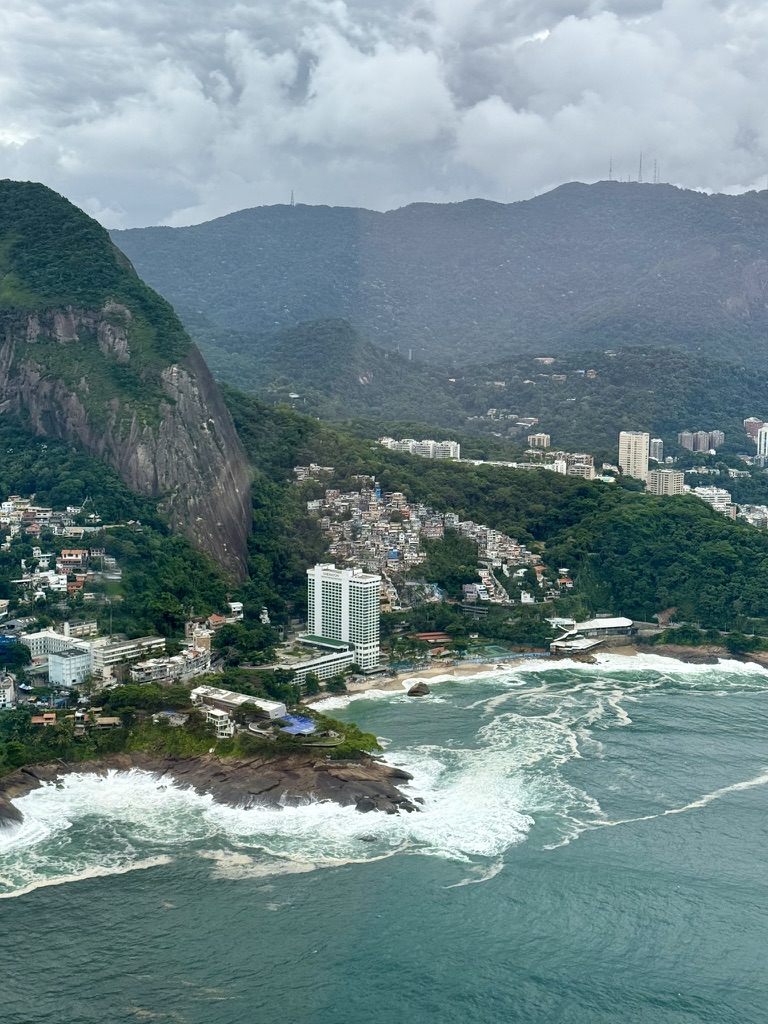
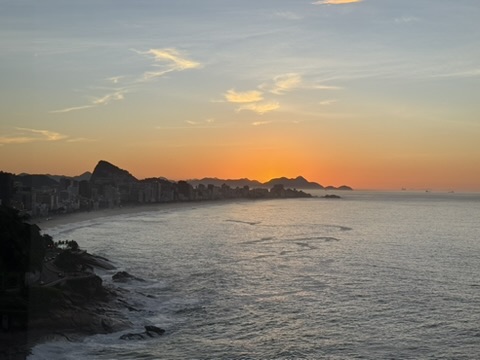
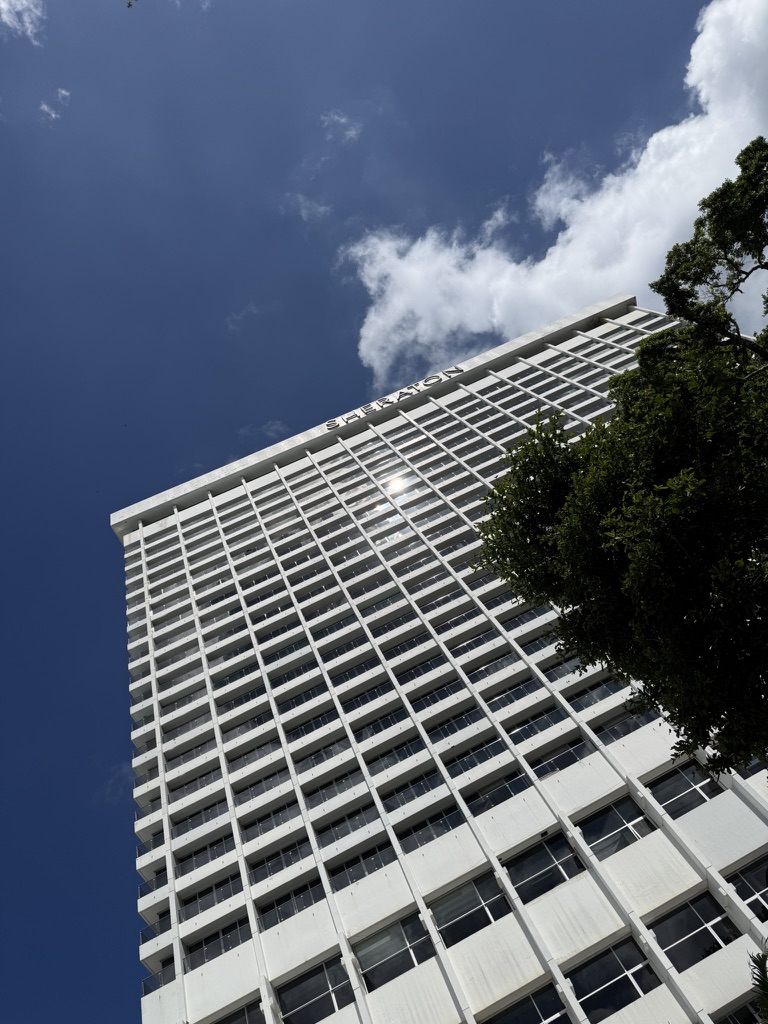
The Sheraton Grand is a tall white tower below the Vidigal hillside and the rock face of Dois Irmãos. It opened in 1974 as the Sheraton-Rio, 26 floors in a cove of its own, and it is still the only hotel in Rio on the beach side of the road: you walk from the pool straight onto the sand of Praia do Vidigal, where loungers, umbrellas and towels are waiting. There are tennis courts in the garden, and a view along the whole curve of Leblon and Ipanema. Get up for at least one sunrise.
The hill behind the hotel is Dois Irmãos, the Two Brothers, 533 metres of granite. The trail to the top starts at the upper end of Vidigal and takes 30 to 60 minutes; from the summit you look down on Ipanema, Leblon, the lagoon and across to Christ the Redeemer.
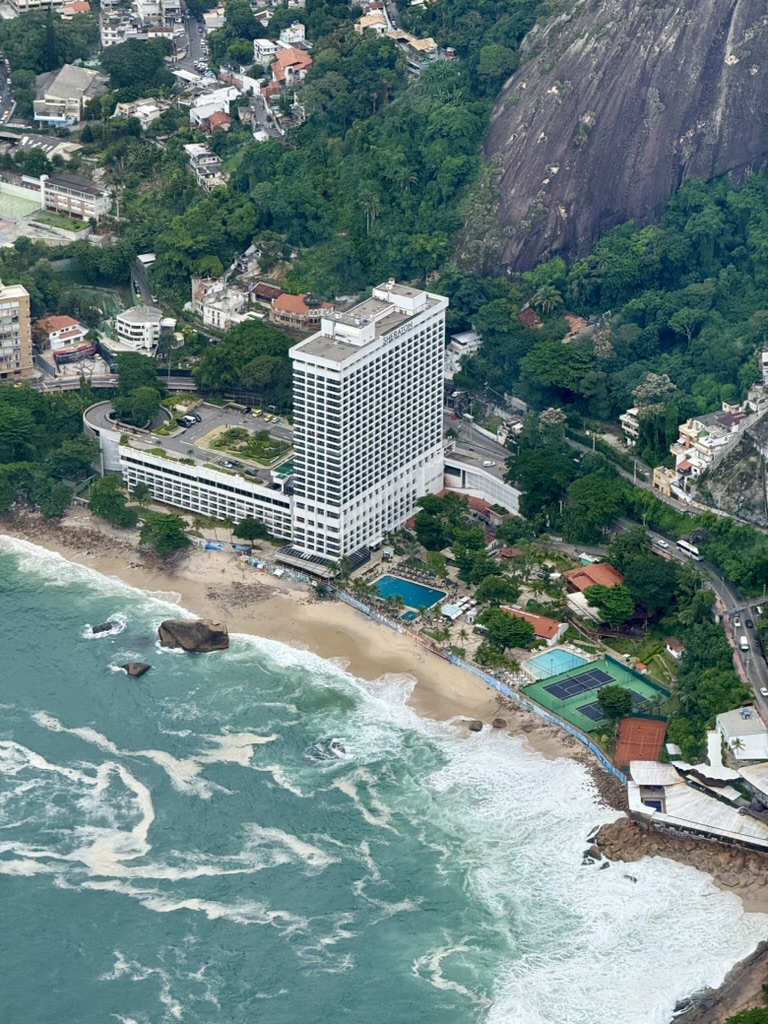
Ask for an upper floor: the rooms there are renovated and fresher than the ones lower down. The whole hotel was done up for the 2016 Olympics, but the top floors are where it shows. From the balcony the sun comes up behind the hills at the far end of Ipanema, with the beach still empty. Order a caipirinha at the pool bar; the drinks by the pool are excellent. Leblon's restaurants are about 15 minutes away on foot along Avenida Niemeyer, or a short ride.
See it from a helicopter
Rio makes the most sense from the air: a city squeezed between granite peaks, forest and the Atlantic. Flights leave from the heliport on Lagoa Rodrigo de Freitas, the lagoon behind Ipanema, or from the helipad on Morro da Urca at the foot of Sugarloaf. The short ones last six or seven minutes and stay over the beaches; the longer ones, 20 to 35 minutes, loop past Christ the Redeemer, Sugarloaf and the Tijuca forest.
Our flight went past Vidigal and the hotel first. From up here the whole corner makes sense: the white tower in its cove, the favela climbing the slope behind it, the bare granite of Dois Irmãos, and the surf breaking on the rocks below. Then past Christ the Redeemer at eye level, with Copacabana spread out below. It was a cloudy morning, and still worth every minute.
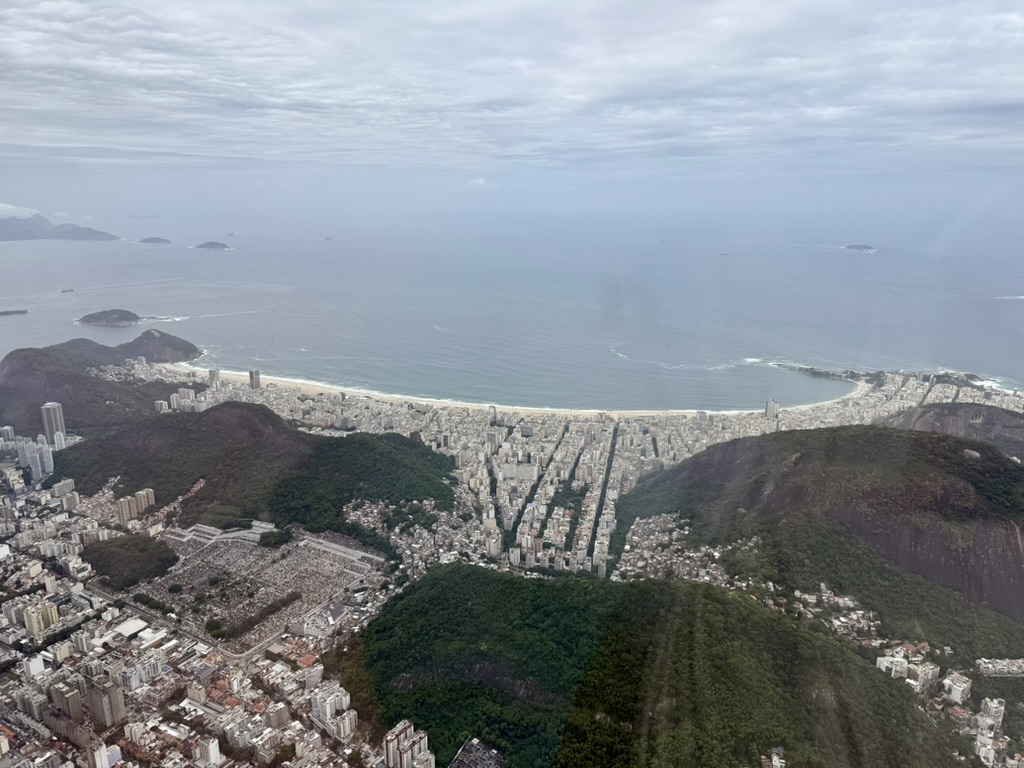
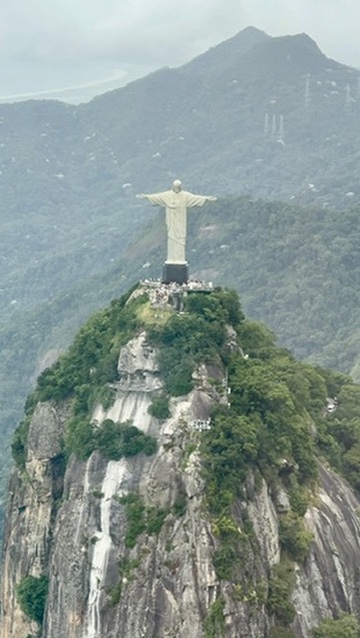
The statue is 30 metres tall on an 8-metre pedestal, its arms span 28 metres, and it has stood on the 700-metre summit of Corcovado since 1931: reinforced concrete under a skin of soapstone. Copacabana below it runs for four kilometres between two forts, with Roberto Burle Marx's black-and-white wave pattern along the promenade. The phone recorded 859 metres of altitude when the Copacabana picture was taken; from up there, the curve of the beach is the whole picture.
One day, three buildings
Rio is a great city for architecture. Book an architecture tour, or do it yourself: we saw all three of these buildings in one day.
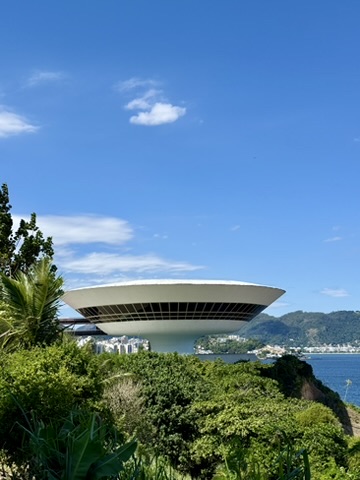
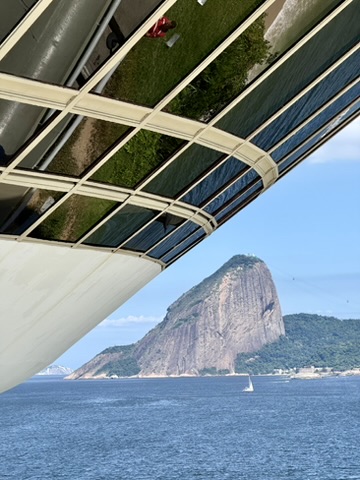
Start across the bay in Niterói, at Oscar Niemeyer's Museum of Contemporary Art, the MAC, opened in 1996. The white saucer is 16 metres high and 50 metres across, three floors on a single stem, standing in a pool of water that Niemeyer likened to a flower. A ramp curls up to the entrance, and from under the rim you look straight across the water to Sugarloaf. The ferry from Praça XV crosses to Niterói in about 20 minutes; from the terminal it's a short taxi ride, and the museum is the best-known stop on the Caminho Niemeyer, the string of his buildings along the Niterói waterfront.
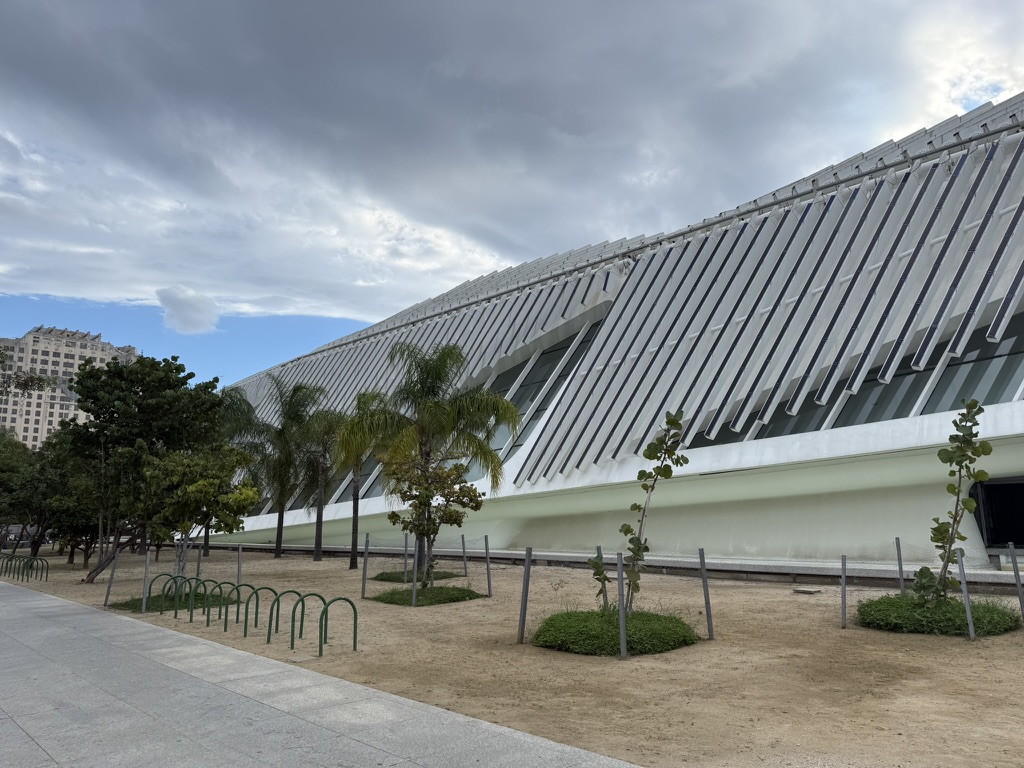
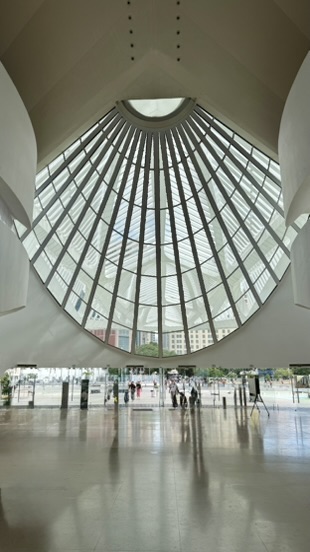
Back in Rio, Santiago Calatrava's Museum of Tomorrow (Museu do Amanhã) opened on Pier Mauá in December 2015, part of the port's makeover before the 2016 Olympics. Walk along the outside before you go in: the long white building is lined with angled fins, and they move. They carry solar panels that tilt through the day to follow the sun, and the pool the building seems to float in is bay water, pumped through to cool the museum and released again. Inside, 5,000 square metres of exhibitions ask where the planet is heading, and a huge ribbed window fills the end of the hall.
The hidden gem: a brutalist cathedral
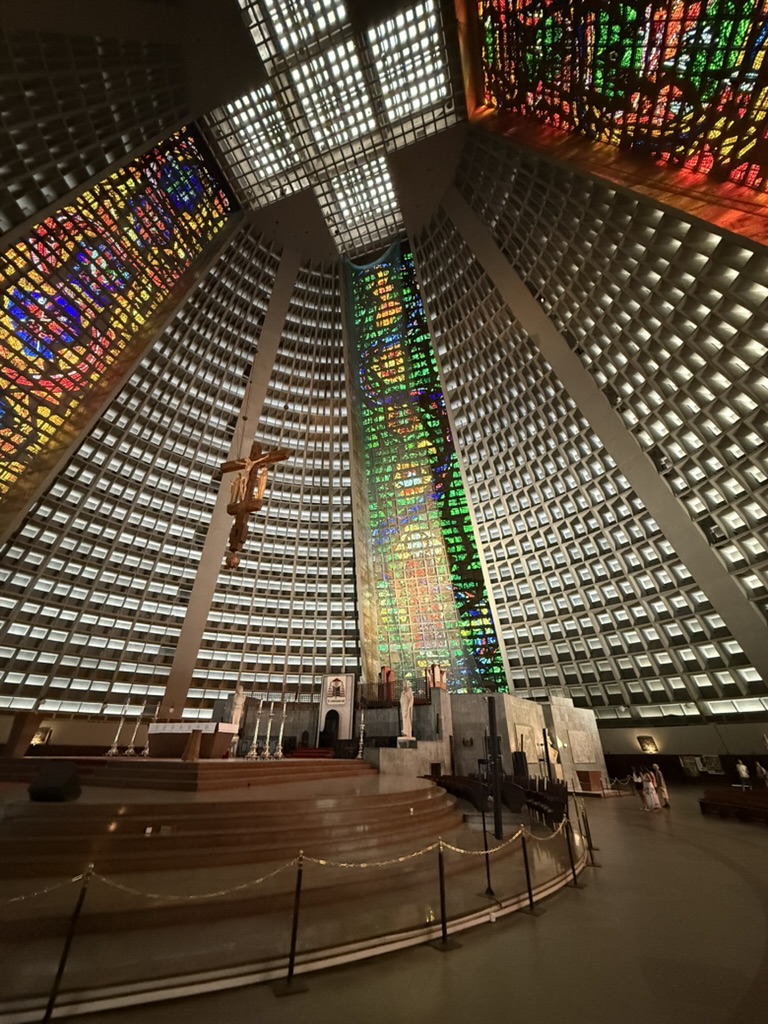
The one we'd send everyone to is downtown: the Catedral Metropolitana de São Sebastião. From the street it's a 75-metre cone of raw concrete, 106 metres across at the base. Edgar de Oliveira da Fonseca modelled it on the Mayan pyramids of Yucatán, a shape he chose so that everyone inside stands equal before God. It was built between 1964 and 1979 and holds 20,000 people standing, 5,000 seated.
Inside, four stained-glass windows rise 64 metres from floor to ceiling and meet in a glass cross at the top. Each stands for one word of the creed: green for one, red for holy, blue for catholic, yellow for apostolic. The rest is bare concrete, and the light does the work.
Brutalism fans should turn round on the way out. Across Avenida República do Chile stands the Petrobras headquarters, Roberto Luís Gandolfi's 29-storey concrete block of 1967–72, with gardens by Roberto Burle Marx built into it. The two were finished five years apart, and they belong together.
If you go
Suitcases, not duffles. Leave the duffle bag at home and travel with suitcases only. In Brazil, it lowers the risk of your luggage going missing.
- Where to stay? the Sheraton Grand at the end of Leblon, for the beach, the pool and the view. Ask for an upper floor.
- What about the helicopter? a helicopter flight over the city, with Christ the Redeemer at eye level. Flights leave from the Lagoa heliport or from Morro da Urca.
- What to see in a day? the MAC, the Museum of Tomorrow and the cathedral in one day, with an architecture tour or on your own.
- How to cross the bay? the ferry from Praça XV to Niterói takes about 20 minutes.
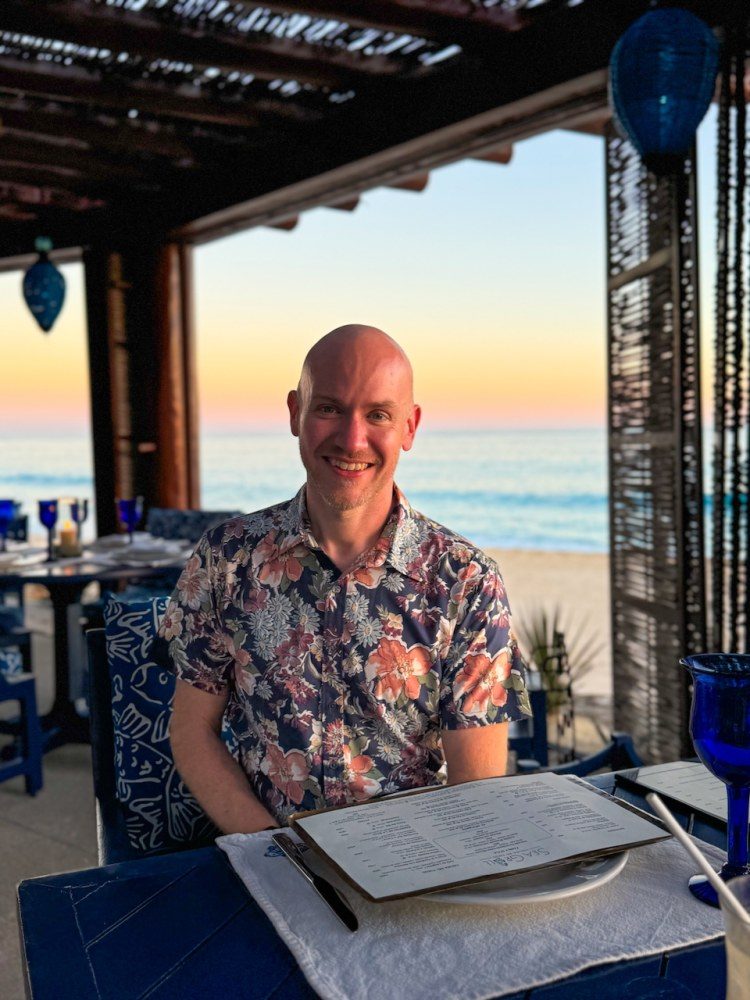
Jon can get you the best deals.
Jon Nickel-D’Andrea · Travel advisor with Fora Travel
Tell Jon you read this story. He builds the same trip around your dates, your pace and the people you’re travelling with.
Easy to add yourself, whoever books the trip.
If you book through an affiliate link, yourwindowseat may earn a commission, at no extra cost to you. How we earn
What to book yourself, and what to leave to Jon →