Stories Brazil
São Paulo: concrete, design and Paulista
Lina Bo Bardi’s floating museum, a tower wrapped in rainforest, Peruvian-Japanese dinners, and the Sunday the main avenue belongs to walkers.
In early April 2026 we spent a long weekend in São Paulo, Friday to Sunday, based at the Renaissance São Paulo Hotel, a block from Avenida Paulista. São Paulo is not a pretty city and doesn't try to be. What it has is concrete, some of the best modern architecture in the Americas, the best restaurants in the country, and a design scene with a street of its own. Plan the weekend around those three: buildings, food, shops.
A tower off Paulista
The Renaissance is where we'd stay again. It is a Ruy Ohtake building, designed in 1986 and built between 1992 and 1996: a 28-floor tower in three tones of maroon panelling, with 444 rooms, a Club Lounge that does breakfast and a proper happy hour, and Terraço Jardins, a restaurant that cooks São Paulo classics. Ohtake is the architect of the Hotel Unique, the copper-clad "watermelon slice" on Avenida Brigadeiro Luís Antônio, and this earlier tower is calmer but just as sure of itself.
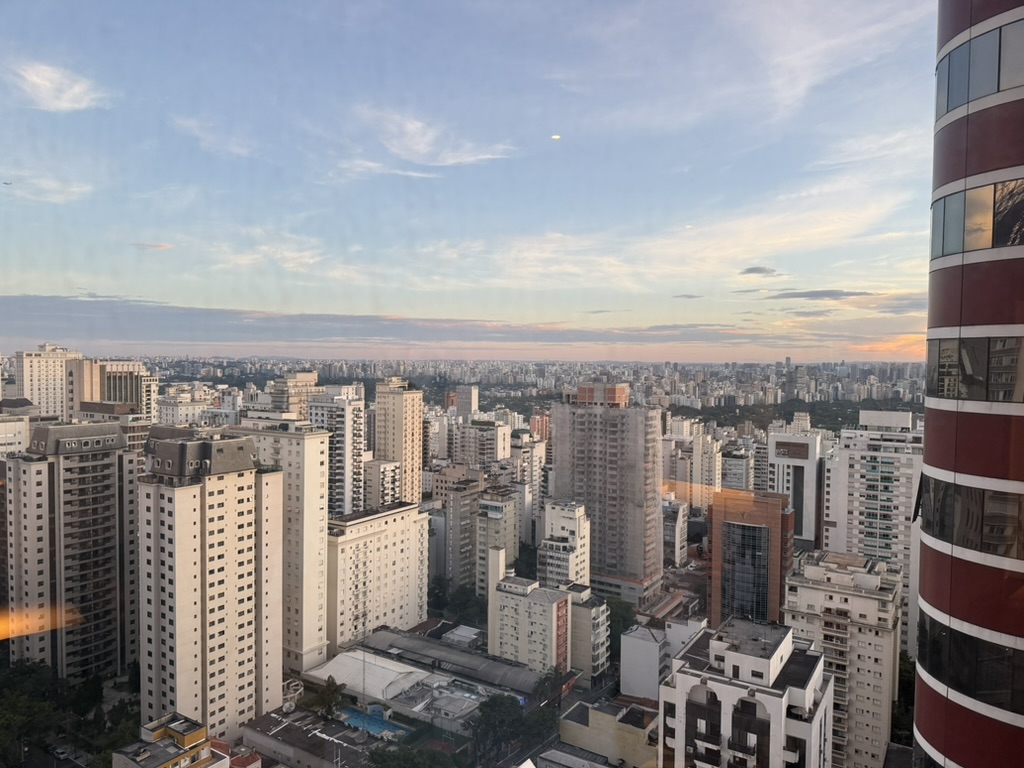
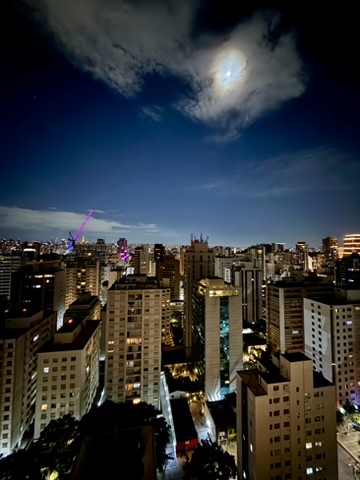
The location does the rest. The hotel stands on the corner of Alameda Santos and Rua Haddock Lobo, one block below Paulista, with the Jardins shopping streets starting right behind it. From the upper floors the view runs south over Jardins to the horizon, tower after tower, and at the end of the day the whole grey city turns pink.
If money is no object: the Rosewood
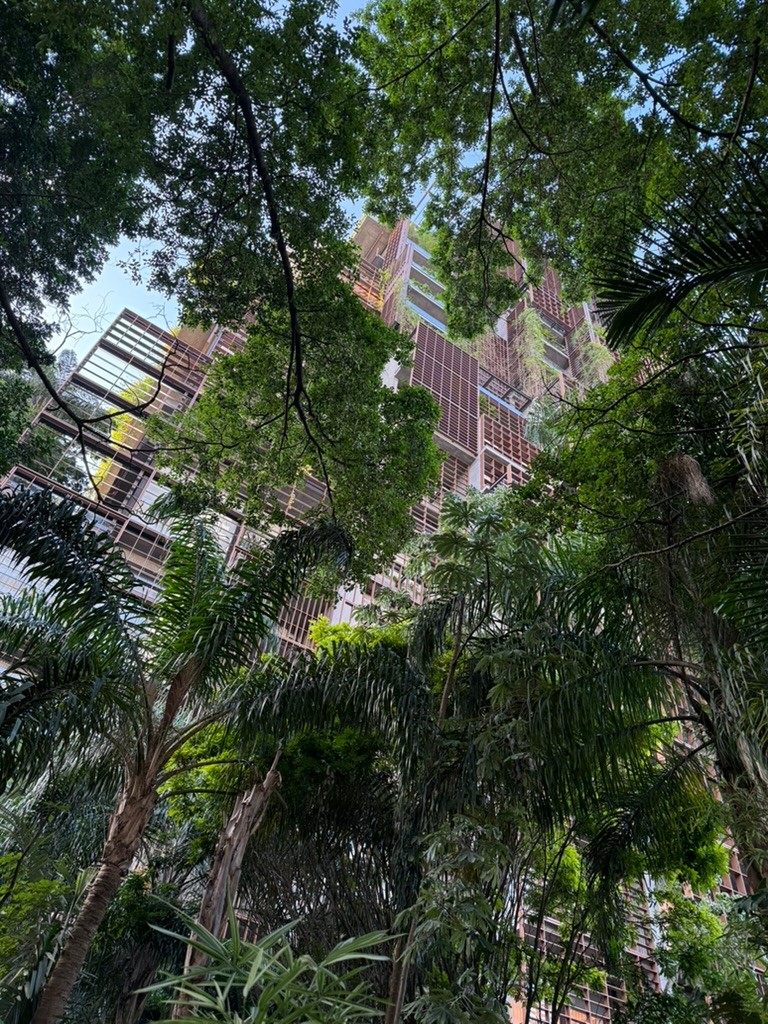
Our luxury tip, for the best green architecture and design in the city, is the Rosewood São Paulo. It opened in January 2022 inside Cidade Matarazzo, a block of early-twentieth-century buildings just off the eastern end of Paulista that a French developer has turned into hotel, residences, shops and gardens, billed as Brazil's largest upcycling project. Half of the hotel is the old Matarazzo maternity hospital of 1904, where half a million Paulistanos were born before it closed in 1993.
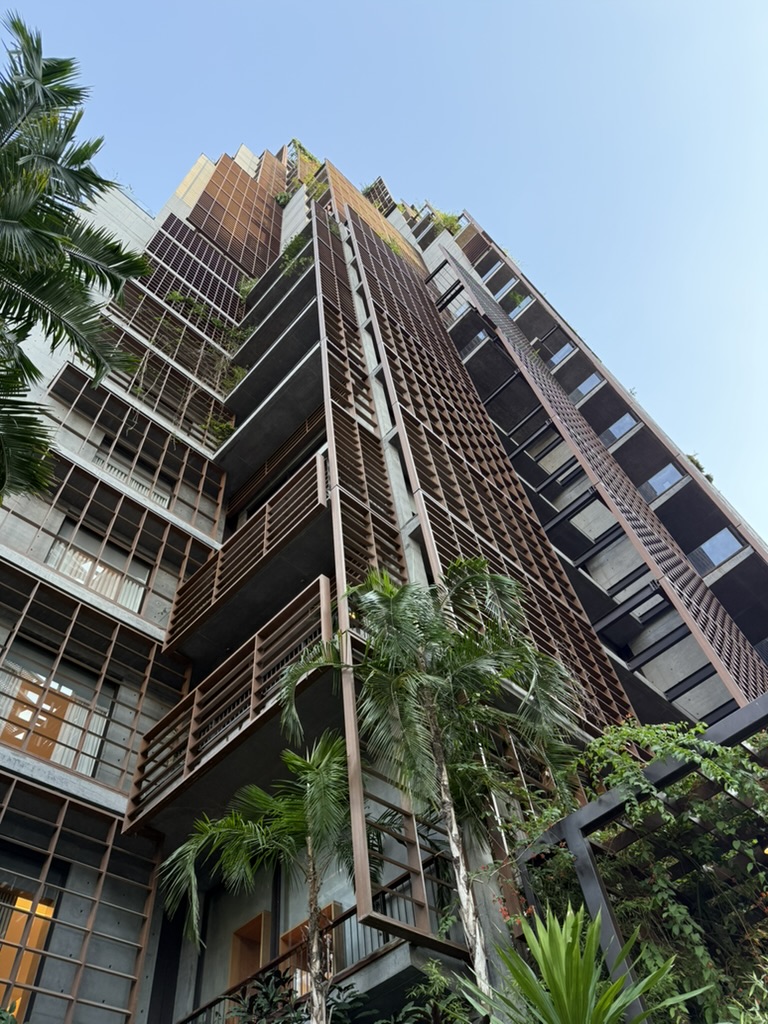
The other half is Jean Nouvel's Mata Atlântica Tower: 25 storeys of concrete that step inwards as they rise, so that every setback becomes a roof garden. Two hundred and fifty trees, some of them 14 metres tall, grow out of the façade, all from the Atlantic rainforest that once covered this part of Brazil. Philippe Starck directed the interiors and commissioned 57 Brazilian artists for more than 450 works, so there is something to look at in virtually every room. There are 160 rooms and suites, six bars and restaurants, and a rooftop pool.
Sunday, when the avenue belongs to walkers
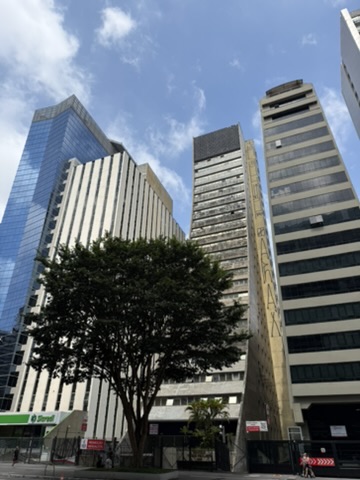
Go on a Sunday. Since 2015 Avenida Paulista, the city's main street, has been closed to cars on Sundays and holidays, and the whole avenue turns into a promenade: families in the middle of the road, cyclists, buskers every hundred metres, food carts, and the towers on both sides with nobody in them. It began as a one-off in June 2015 to celebrate a new bike lane and was weekly by October; ten years on, it is the best free thing in the city.
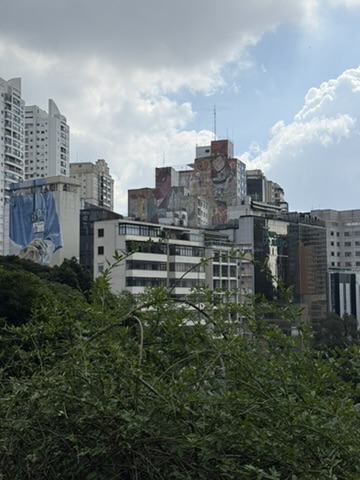
Start at MASP. Lina Bo Bardi's museum of 1968 is the most famous building in São Paulo for a reason: the glass box hangs from four red concrete pillars with a free span of 74 metres, and the ground underneath was left open on purpose, as a public square. On Sundays that square fills with the antiques fair that has been held here since 1979, and the belvedere behind it looks north over the valley, where the tower blocks across the way carry murals several storeys high.
More concrete
São Paulo is a brutalist city, and the good stuff takes a day of its own. Lina Bo Bardi's SESC Pompéia, a 1986 leisure centre built into an old factory, with two concrete towers joined by walkways in mid-air. Oscar Niemeyer's Copan, the rippling apartment block that fills a whole downtown corner. Vilanova Artigas's architecture faculty at the university, a concrete roof over one open room. Book an architecture tour or take a taxi from one to the next.
The chair to know
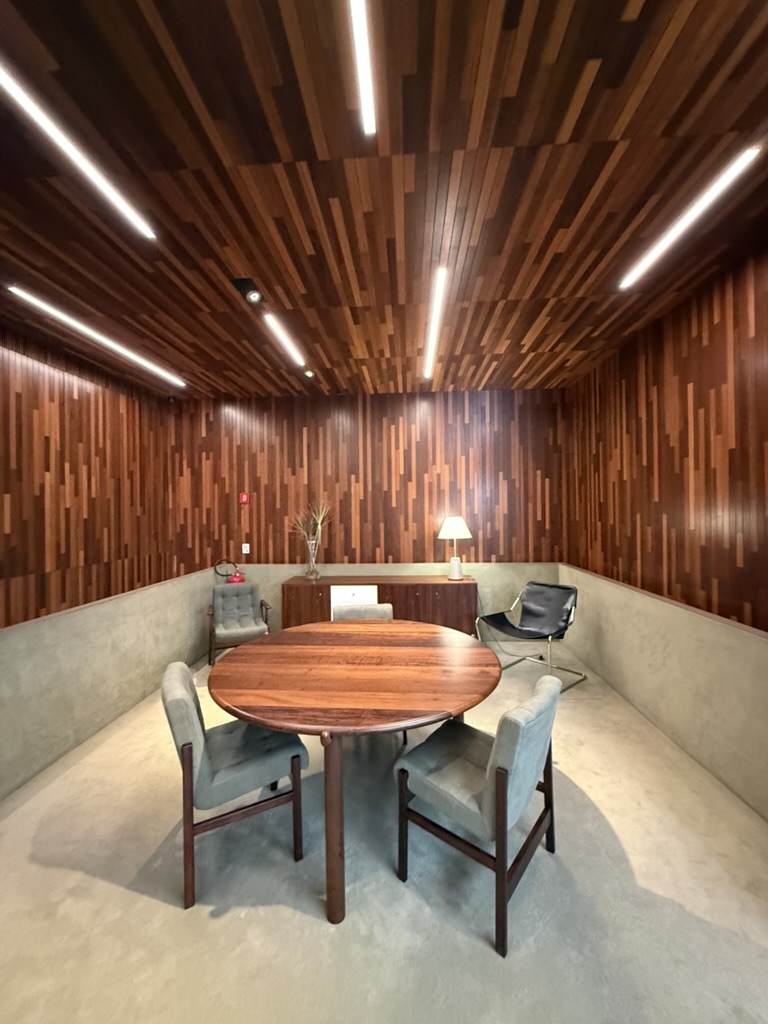
The architect who taught most of those buildings' successors also designed a chair. Paulo Mendes da Rocha's Paulistano armchair of 1957 is a single bent steel bar with a leather sling, made for the Club Athletico Paulistano and now in MoMA's collection. You will see it in the design showrooms, in hotel lobbies and, if you look closely, in the corner of our showroom picture below.
The design street
For furniture, São Paulo has a whole street: Alameda Gabriel Monteiro da Silva in Jardins, well over a hundred showrooms along one avenue, from Italian brands to the Brazilian houses that matter more here. Etel reissues the Brazilian modernists, Carbono Design shows contemporary Brazilian pieces, Dpot Objeto does the small things. Saturday morning is the time: the showrooms are open, the street is quiet, and you can walk the length of it and stop where something catches your eye.
The room in the picture is typical of what you find behind the doors: walls and ceiling clad in strips of Brazilian hardwood, a round dining table, tufted chairs, and a black-leather Paulistano in the corner. Everything in São Paulo's design showrooms is meant to be sat on.
Books at the oldest mall
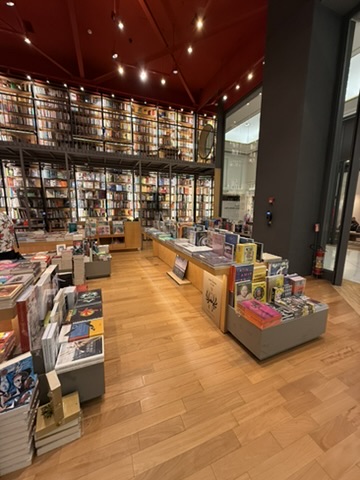
Ten minutes down the hill, Shopping Iguatemi on Avenida Faria Lima is the oldest mall in Brazil still in business, opened in 1966, and it is still the smart one. Its bookshop is the reason to go in: Livraria da Travessa, the Rio chain founded in 1986, opened here in July 2022 on two floors and 330 square metres, designed by Bel Lobo and Bob Neri with black shelves that run to the ceiling so that the covers do the colouring. It took over the space of Livraria Cultura, the São Paulo institution that went bankrupt in 2023, and it is a better shop than the one it replaced.
Dinner: Peru meets Japan
São Paulo has the largest Japanese community outside Japan, and it shows at the table. The city's high-end dining is where we spent our evenings, and the kitchen we'd send you to first is Nikkei, the Peruvian-Japanese cooking that Japanese immigrants developed in Lima: ceviche and tiradito with soy and yuzu, Peruvian chillies on Japanese fish.
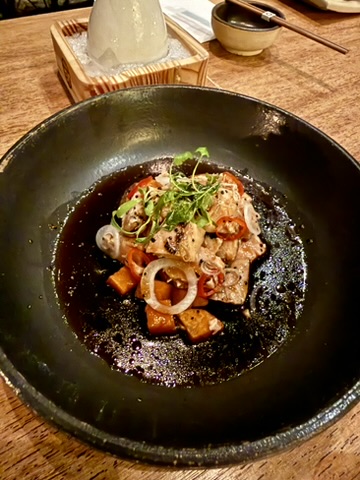
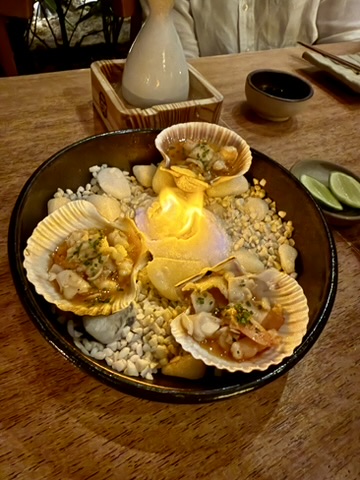
Osaka on Rua Amauri in Itaim Bibi is the Lima original's first branch in Brazil; the group also cooks in Mexico City, Santiago and Buenos Aires. On our night it was fish in a dark, glossy sauce with sweet potato and red onion, and scallops set alight in their shells on a bed of salt, with cold sake poured from a wooden box. Book ahead, and go for the tasting menu if you can.
The rooftop
For the view, the hotel to know is Brazilian: the Fasano São Paulo Itaim, a few blocks from Osaka on Rua Pedroso Alvarenga. The Fasanos have fed this city since 1902, when Vittorio Fasano from Milan opened the Brasserie Paulista downtown; four generations later Rogério Fasano runs eleven hotels and thirty restaurants in Brazil, Uruguay and the United States, and the group still feels like a family company.
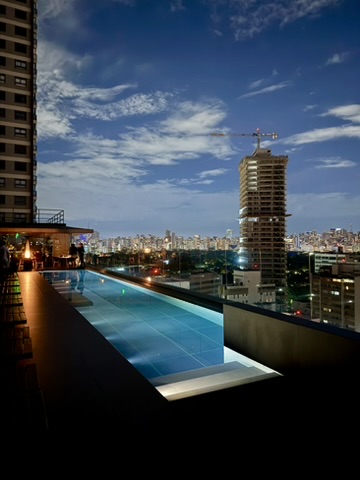
The Itaim hotel opened in May 2023, 20 floors and 107 residential-style rooms from 30 to 190 square metres, designed by Marcio Kogan with aflalo/gasperini, with Gero Itaim downstairs for the pasta. The rooftop is the point: a long heated pool along the edge of the roof, a pool bar, and the whole low sprawl of São Paulo lit up to the horizon, cranes and all. After dinner in Itaim, this is where to end the night.
If you go
Make it a Sunday. Fly in on Friday, do the design street and Itaim on Saturday, and keep Sunday for Paulista without cars, MASP and its antiques fair, and the Rosewood's gardens.
- Where to stay? the Renaissance São Paulo, one block off Paulista. Splurge: the Rosewood in Cidade Matarazzo. For the rooftop: the Fasano São Paulo Itaim.
- Where to walk? Avenida Paulista on a Sunday, when it is closed to cars; the antiques fair runs under MASP in the morning. Trianon-MASP metro station is right there.
- What to see? MASP, SESC Pompéia, Copan and the architecture faculty, or book an architecture tour.
- Where to shop? the showrooms of Alameda Gabriel Monteiro da Silva; Livraria da Travessa in Shopping Iguatemi.
- Where to eat? Osaka in Itaim Bibi for Nikkei, then the Fasano Itaim rooftop.
Jon can get you the best deals.
Jon Nickel-D’Andrea · Travel advisor with Fora Travel
Tell Jon you read this story. He builds the same trip around your dates, your pace and the people you’re travelling with.
Easy to add yourself, whoever books the trip.
If you book through an affiliate link, yourwindowseat may earn a commission, at no extra cost to you. How we earn
What to book yourself, and what to leave to Jon →